KRWQ Links Korea’s Sovereign Debt to Blockchain Liquidity in Landmark Stablecoin Collateral Move
KRWQ integrates tokenized Korean government bonds into its reserves, linking sovereign debt to onchain won liquidity.
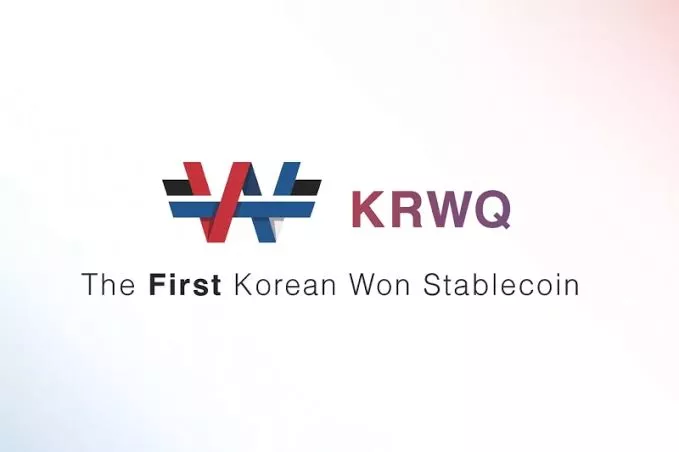
In a development that could reshape how national currencies intersect with decentralized finance, KRWQ has begun acquiring tokenized Korean government bonds as part of the reserve structure backing its Korean won stablecoin. The transaction, executed through a framework developed by Etherfuse and held at Shinhan Securities, marks the first time tokenized Korean sovereign debt has been used as collateral for a KRW-denominated stablecoin.
The initiative establishes a direct bridge between Korea’s government bond market and onchain liquidity. By embedding sovereign debt into its reserve architecture, KRWQ is positioning itself not merely as a digital payment instrument but as a structural extension of Korea’s capital markets into blockchain infrastructure.
According to the announcement distributed by IQ, the stablecoin’s developer, the bonds are tokenized via Etherfuse’s Stablebond framework and custodied at Shinhan Securities, one of South Korea’s largest securities firms. The move reflects what the company describes as a strategy to anchor blockchain-based won liquidity to “transparent, high-quality reserves.”
Dave Shin, Chief Operating Officer of KRWQ, said the design objective was to create “a trusted KRW settlement asset backed by transparent, high-quality reserves.” By integrating tokenized Korean government bonds into the reserve structure, KRWQ ties its stability directly to the sovereign instruments underpinning Korea’s traditional financial system.
The broader significance lies in demand dynamics. As stablecoin usage grows for trading, settlement and cross-border payments, so too does the need for credible backing assets. In dollar-denominated markets, tokenized US Treasury exposure has become a cornerstone of stablecoin reserve management. KRWQ’s approach effectively replicates that model in a Korean context, potentially generating incremental structural demand for won-denominated sovereign debt.
Navin Vethanayagam, described as Chief Brain of IQ, framed the strategy in systemic terms. “As financial activity increasingly settles on-chain, the assets backing that liquidity matter,” he said, emphasizing that linking Korean government bonds to blockchain-native reserves could create a new channel of global demand for Korea’s sovereign instruments.
The infrastructure underpinning KRWQ is provided by Frax, whose technology stack supports tokenized US Treasury strategies, including products associated with BlackRock and other institutional players. KRWQ operates on that foundation while maintaining its own won-denominated reserve framework.
Importantly, Shinhan Securities is not involved in the issuance, pricing or distribution of the stablecoin or Etherfuse’s stable bonds, and the products are not offered to domestic Korean investors. The structure appears carefully delineated to separate custody and tokenization functions from distribution and governance responsibilities.
For South Korea’s digital asset sector, the move signals ambition. Since launching in Seoul in 2018, IQ has built a presence across major exchanges, and KRWQ extends that footprint by introducing a compliant, infrastructure-grade won stablecoin designed for institutional use.
If successful, the model could deepen integration between sovereign bond markets and blockchain settlement layers. More than a technical milestone, KRWQ’s bond-backed design reflects a broader shift in stablecoin evolution, where credibility increasingly hinges not just on pegs, but on the quality and transparency of underlying reserves.