

Iran's Two-Week Ceasefire Leaves Risk Markets in Limbo
Iran announced a two-week ceasefire, but contradictory official signals on any extension have left crypto markets in limbo, suppressing risk appetite without delivering a clear bullish or bearish catalyst.
Iran's Two-Week Ceasefire Leaves Risk Markets in Limbo
Iran announced a two-week ceasefire agreement this week, but contradictory signals from officials over whether any extension is planned have left global markets parsing incomplete information, with crypto assets caught between competing risk narratives.
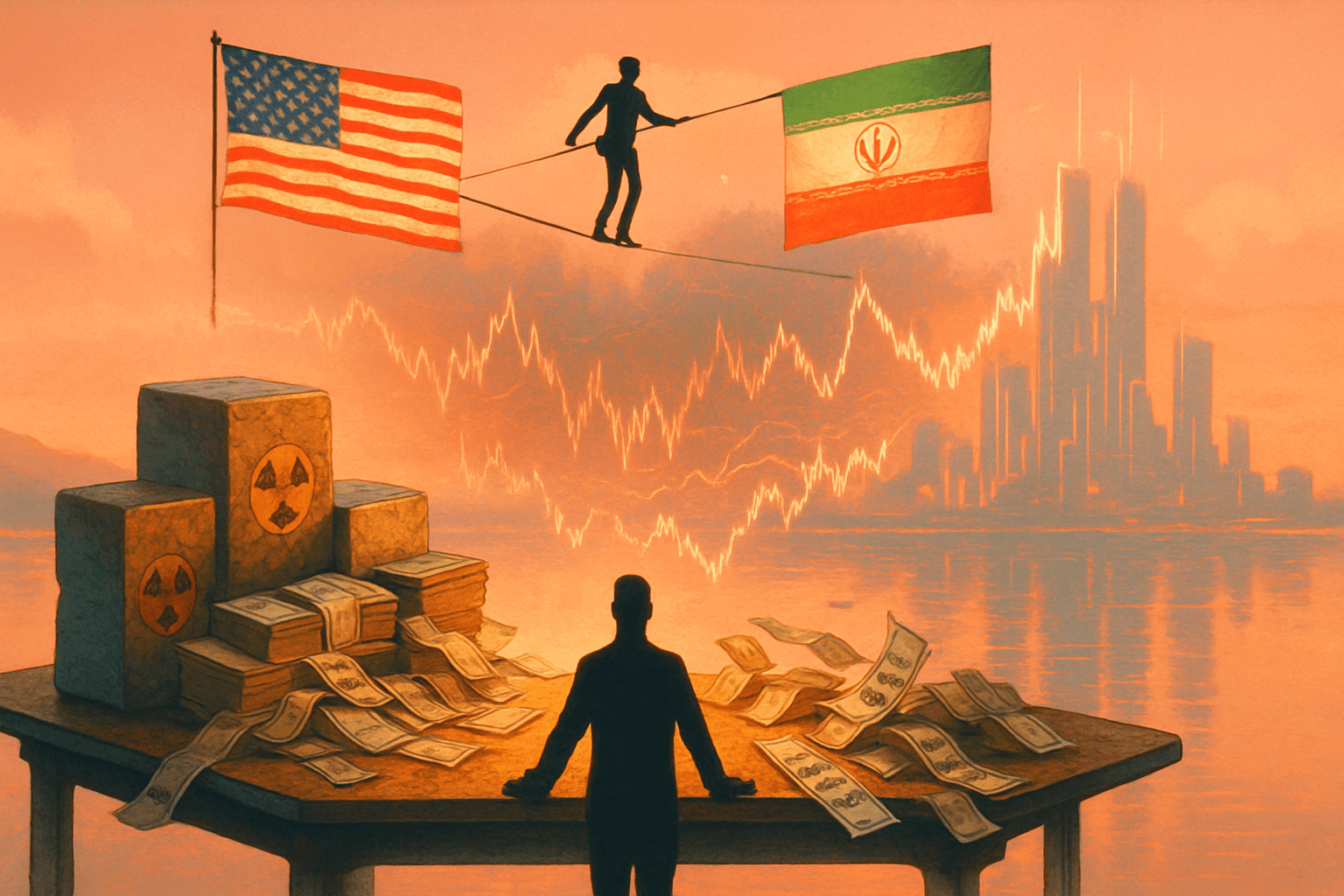
The ceasefire itself is a meaningful de-escalation signal. Middle East conflicts carry outsized weight in global markets because of their direct link to oil supply chains, and any reduction in hostilities typically lifts risk sentiment across equities, commodities, and crypto. The messaging, however, undermines that signal. Two Crypto Briefing reports published around the same event directly contradict each other: one suggests Iranian officials hinted at a potential extension in coming days, while the other states flatly that no extension plans are currently in place. That is not a minor discrepancy. It reflects either confused internal communication from Tehran or deliberate ambiguity in how the agreement was presented publicly.
Two weeks is a short window. For traders managing macro risk exposure, a fortnight-long ceasefire without a credible path to extension provides limited cover to rotate back into risk assets. Institutional desks that reduced exposure during the escalation period have little reason to reverse course on an agreement that could expire before the next quarterly settlement. Short-term ceasefires in the region have a poor track record of holding, and the absence of a clear extension framework compounds that skepticism.
Crypto's relationship with Middle East geopolitics runs through oil prices and the broader risk-on/risk-off toggle that drives capital allocation. When tensions spike, oil prices rise, inflation expectations shift, and investors reduce exposure to volatile assets including Bitcoin and Ethereum. The inverse holds too, but only when the de-escalation signal is clear and durable. The 2020 assassination of Iranian General Qasem Soleimani offers a useful reference point: Bitcoin dropped sharply in the immediate aftermath as traders priced in systemic risk, then recovered once it became clear the situation would not escalate into a wider regional war. That pattern was a sharp move followed by a fast recovery, driven by clarity. What the current ceasefire lacks is exactly that clarity.
Without cryptocurrency price data tied directly to the announcement, quantifying the market response precisely is not possible. The structure of the situation points to suppressed risk appetite rather than an outright bearish catalyst. Markets are not pricing in a war escalation, but they are not pricing in a lasting peace either. That middle-ground uncertainty tends to compress crypto trading ranges, with volume declining as participants wait for a more definitive signal. Oil markets will likely show a similar pattern, with prices softening modestly on the ceasefire headline but finding a floor as traders discount the probability the agreement holds past two weeks.
The broader implication for crypto investors is that this is a macro story, not a crypto-specific one. Bitcoin's correlation with traditional risk assets has remained elevated through 2024 and into 2025, meaning geopolitical shocks transmit faster and more reliably into crypto prices than in earlier market cycles. A ceasefire that stabilizes and extends would be a genuine tailwind, removing one layer of macro uncertainty and potentially contributing to a risk-on rotation. A ceasefire that collapses would likely trigger a sharper selloff than the initial announcement justified, because markets will have briefly priced in stability they did not actually receive. Both outcomes remain live possibilities until Iranian officials clarify the extension question with a single, consistent message. Diplomatic ambiguity is not a bullish signal for assets that already carry substantial volatility on their own.