
US-Iran Peace Talks and a $20B Uranium Deal: What It Means for Risk Assets
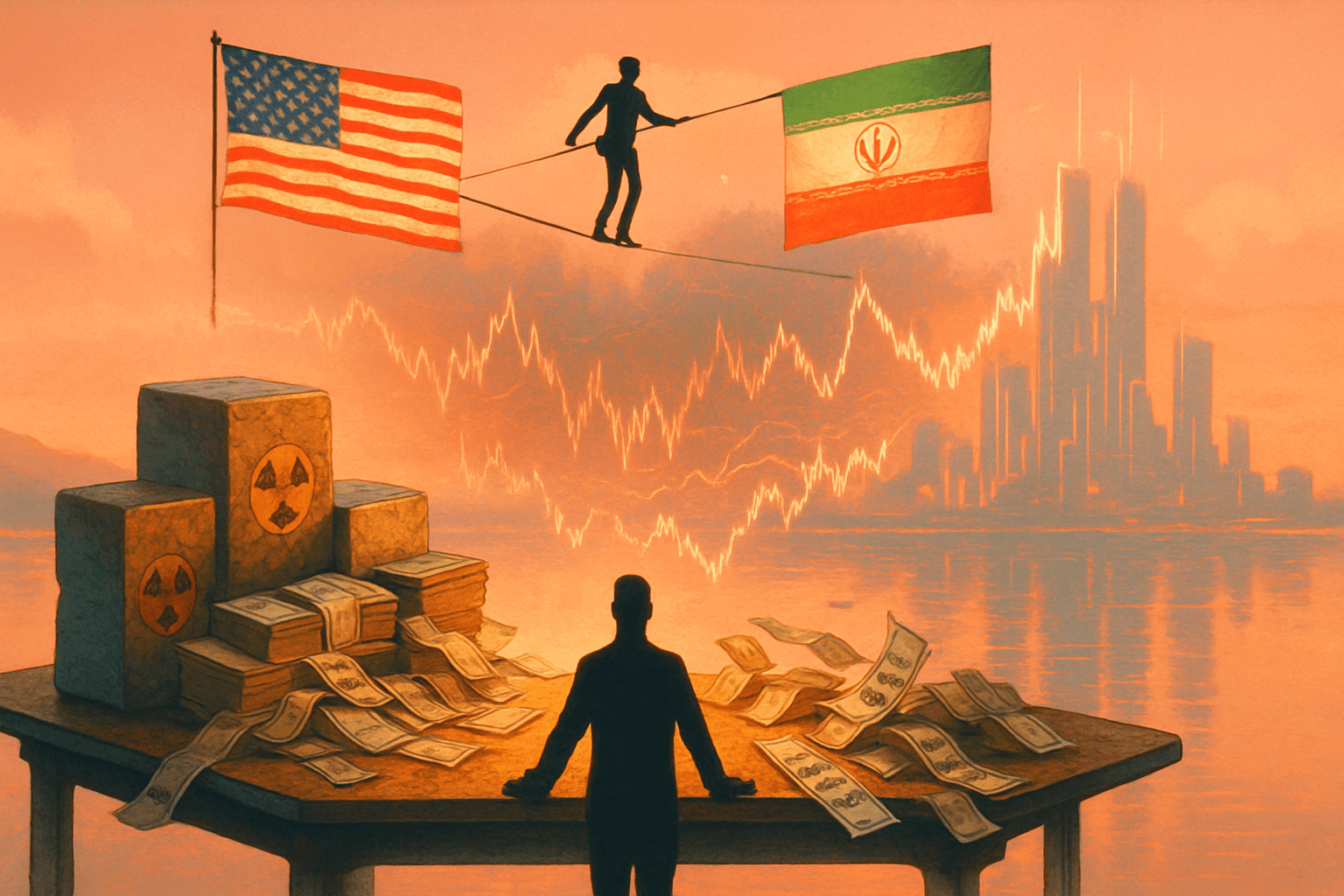
The US is reportedly considering a $20 billion cash-for-uranium deal with Iran as part of ongoing peace talks in Pakistan. While no direct crypto mechanism exists, the macro ripple effects on risk sentiment are real.
US-Iran Peace Talks and a $20B Uranium Deal: What It Means for Risk Assets
Diplomatic negotiations between the United States and Iran, held in Pakistan this weekend, have introduced a new variable into global markets. The US is reportedly considering a $20 billion cash-for-uranium arrangement with Tehran as part of broader peace talks, a proposal that could ease decades of economic sanctions and shift the geopolitical calculus across the Middle East.
The talks represent the most substantive diplomatic contact between the two countries in years. Since the Trump administration withdrew from the 2015 Joint Comprehensive Plan of Action (JCPOA) in 2018, Iran has steadily advanced its nuclear program while US sanctions have kept its economy largely cut off from global financial systems. A formal agreement, if reached, would mark a significant reversal of that trajectory.
What a Deal Would Actually Mean
The $20 billion figure is not aid. It is structured as payment for Iranian uranium, which would effectively neutralize a portion of Iran's nuclear stockpile while injecting capital into a sanctions-battered economy. For global markets, the immediate read would be bullish on oil supply: sanctions relief typically unlocks Iranian crude exports, adding roughly 1 to 1.5 million barrels per day to global supply. Lower energy prices tend to compress inflation expectations, which historically supports risk-on assets, including equities and crypto.
The indirect path to crypto is real, if not direct. When macroeconomic uncertainty falls, institutional appetite for higher-volatility assets tends to rise. Bitcoin and other large-cap tokens have increasingly traded in correlation with the Nasdaq during periods of geopolitical stress, moving lower when risk sentiment sours and recovering when it improves. A credible de-escalation between Washington and Tehran would reduce one of the persistent tail risks sitting beneath global markets right now.
Historical Precedent Cuts Both Ways
The 2015 JCPOA offers a useful reference point, though not an encouraging one. When the original deal was announced, oil prices fell on anticipated Iranian supply increases, while broader risk assets saw modest positive movement. The deal's collapse in 2018 triggered renewed sanctions, oil price volatility, and a prolonged period of Middle East tension that contributed to broader market instability.
The pattern since then has been consistent: US-Iran negotiations generate headlines, markets react, and talks stall. Crypto Briefing noted that "skepticism remains about a swift resolution" despite the current diplomatic progress, and that assessment is grounded in history. Multiple rounds of back-channel negotiations over the past five years have failed to produce a durable framework. The domestic political environment in the US adds another layer of friction. A $20 billion transfer to Iran, regardless of its structure, faces obvious opposition from congressional hardliners.
Crypto Market Implications: Indirect but Real
No direct mechanism connects an Iran nuclear deal to Bitcoin's price. There is no on-chain data suggesting crypto markets have priced in this scenario, and no major derivatives positioning points to traders making explicit bets on diplomatic outcomes. What matters is the second-order effect on macro sentiment.
If talks succeed and sanctions begin to lift, the resulting drop in geopolitical risk premium would likely support a broader risk-on environment, benefiting crypto alongside equities and commodities. If talks collapse, particularly in a public or acrimonious way, markets would re-price Middle East risk upward, energy prices could spike, and the resulting uncertainty tends to push capital toward safe havens rather than volatile assets.
For crypto investors, the relevant question is not whether Bitcoin has a direct relationship with Iranian nuclear policy. It does not. The question is whether the macro backdrop gets easier or harder. A genuine diplomatic breakthrough would make it easier. Given the track record of US-Iran negotiations, that outcome should be treated as a possibility, not a probability.
The talks in Pakistan are worth watching closely. Not because crypto is on the table, but because the assets that move crypto, risk sentiment, inflation expectations, and institutional appetite for volatility, are all sensitive to what happens next.