
Iran Nuclear Suspension Moves Macro Sentiment, Not Optimism's Fundamentals
Crypto Briefing's April 17 Iran nuclear suspension coverage was miscategorized under Optimism Layer 2 news. Geopolitical de-escalation affects macro sentiment, not OP protocol fundamentals.
Iran Nuclear Suspension Moves Macro Sentiment, Not Optimism's Fundamentals
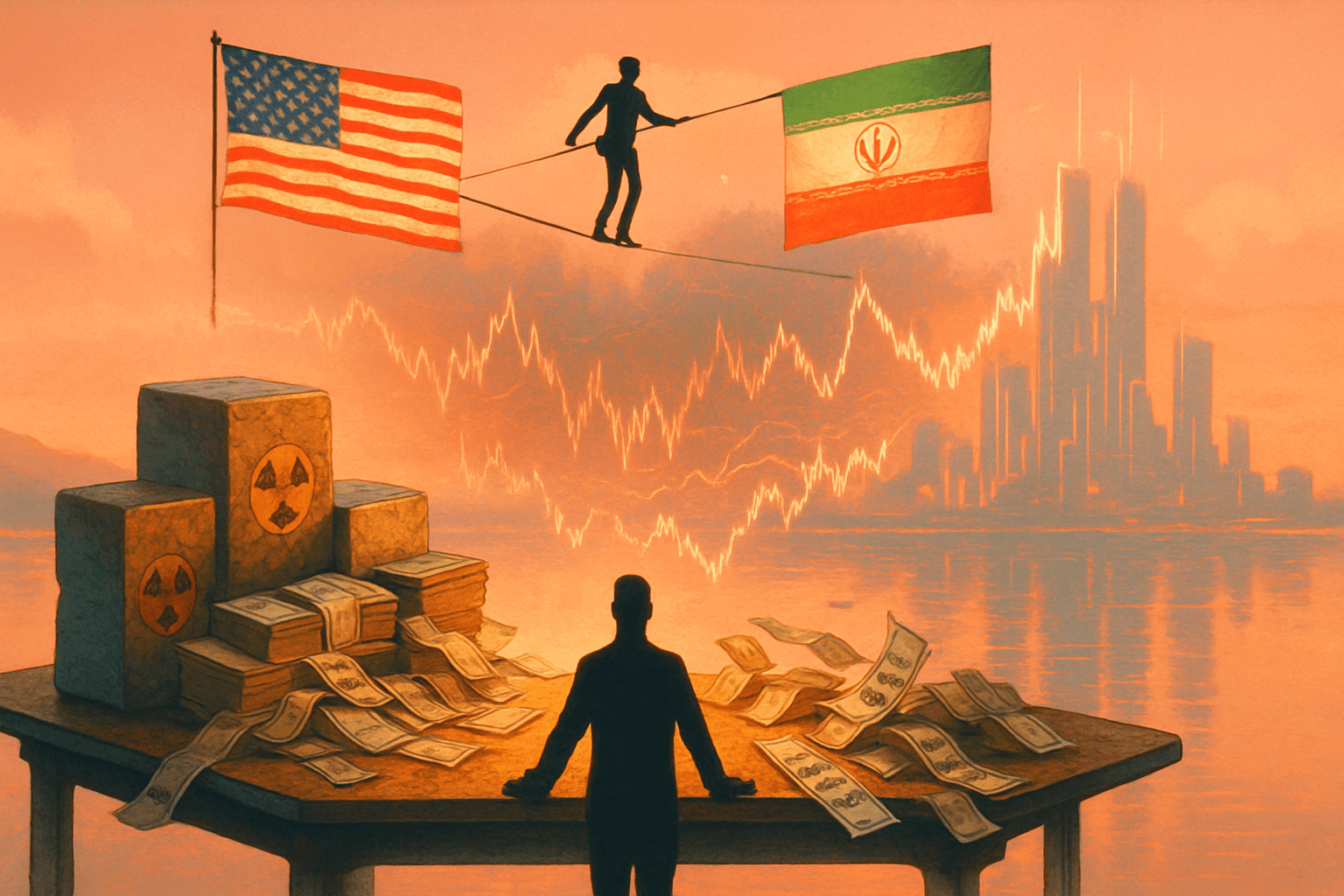
Two Crypto Briefing articles published April 17, 2026 cover the Trump administration's announcement that Iran agreed to suspend its nuclear program indefinitely, with the White House claiming no US funds were required. The news moved geopolitical risk gauges, lifted peace deal probabilities on prediction markets, and broadly improved risk-on sentiment. It has nothing meaningful to say about Optimism, the Ethereum Layer 2 scaling protocol.
The conflation matters. Crypto Briefing framed the Iran announcement around "increased speculation on future US-Iran relations and peace prospects." A second snippet from the same outlet noted that "uncertainty over sanctions relief and asset unfreezing tempers optimism." That final word, lowercase, refers to cautious market sentiment. It has nothing to do with OP, the governance and utility token of the Optimism network, or the OP Stack, the modular framework underpinning chains like Base, Mode, and Zora.
This categorical drift distorts how readers interpret price signals. If OP were to rally on April 17, attributing that move to Iran nuclear de-escalation rather than protocol-specific catalysts would be analytically sloppy. Geopolitical de-escalation does improve risk appetite, and risk appetite does benefit speculative assets including crypto broadly. That is a macro transmission mechanism, not a Layer 2 development story. Bitcoin and Ethereum would absorb that sentiment shift first, with altcoins including OP following as a second-order effect.
The Optimism network is an Ethereum Layer 2 that uses optimistic rollup technology to batch transactions off-chain and settle them on Ethereum mainnet. Its TVL and OP token price are driven by sequencer revenue, governance proposals, Superchain adoption metrics, and broader Ethereum network activity. None of those variables have a documented relationship with US-Iran diplomatic negotiations. A ceasefire in the Middle East does not accelerate OP Stack chain deployments, increase transaction throughput on Optimism mainnet, or change the token's emission schedule.
The broader lesson applies to crypto media coverage generally. Macro events, trade policy shifts, and geopolitical developments influence crypto markets through sentiment and liquidity channels, not through protocol fundamentals. Bundling a nuclear program suspension under Layer 2 coverage obscures that distinction and makes it harder for investors to identify what is actually driving price action. When OP moves, the relevant questions are whether sequencer fees are up, whether a major app deployed on the OP Stack, or whether a governance vote passed. The state of US-Iran relations belongs in a macro risk piece.
As of the April 17 announcements, no connection between the Iran nuclear suspension and Optimism protocol activity, token mechanics, or network development has been documented in on-chain data or official communications from the Optimism Foundation.