
Telegram Turns Chat Into Trading Terminal as Leveraged Futures Reach Mass Adoption
Telegram Wallet adds leveraged futures trading for 150M users, accelerating crypto derivatives adoption.
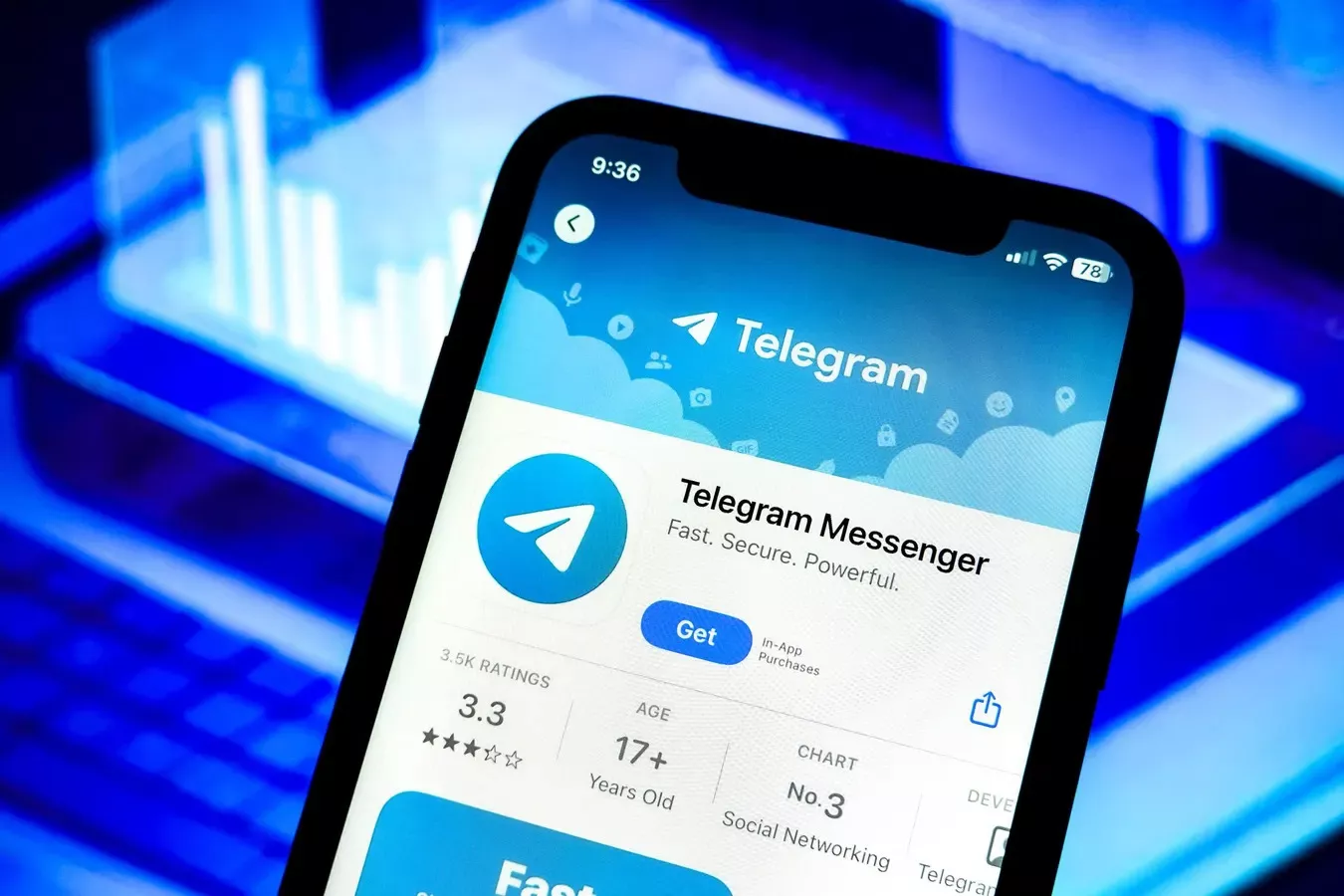
The boundary between messaging and financial markets is rapidly dissolving. With the latest rollout of leveraged futures trading inside Telegram’s native wallet, crypto derivatives have been embedded directly into one of the largest consumer ecosystems in the world, instantly exposing more than 150 million users to advanced trading tools once reserved for professionals.
The new feature, powered through an integration with Ethereum-based decentralized exchange Lighter, allows users to open long and short positions on over 50 assets without ever leaving the app. From Bitcoin and Toncoin to tokenized equities, ETFs, oil, and gold, the offering spans both crypto-native and traditional financial instruments. Trades are executed via an integrated custodial wallet, with leverage reaching as high as 50x—an aggressive threshold that underscores both the opportunity and the risk now placed in the hands of everyday users.
Behind the scenes, the infrastructure has been developed by The Open Platform, the team responsible for building Wallet within Telegram and expanding the capabilities of The Open Network. By directly embedding Lighter’s decentralized order book into the app, the experience removes the need for external platforms entirely. In practical terms, this means a user can move from a casual chat to opening a leveraged position in seconds.
Andrew Rogozov, CEO of The Open Platform, framed the move as a natural evolution of user behavior. He noted that perpetual trading has historically been confined to complex, standalone interfaces, adding that integrating it into Telegram “simplifies access and lowers the barrier for users who already hold and transfer crypto inside the app.” Lighter’s CEO, Vladimir Novakovski, took that vision further, describing the integration as a step toward eliminating friction between communication and financial action, where users can shift “from chat to market in seconds.”
The timing is not accidental. Perpetual futures have become the dominant force in crypto derivatives, accounting for as much as 90% of total trading volume across major exchanges in 2025. Monthly volumes have consistently surpassed the trillion-dollar mark, signaling not only institutional demand but also a growing appetite among retail participants. By embedding these instruments into a familiar social platform, Telegram is effectively accelerating that trend.
Yet the rollout is not without constraints. Access remains restricted in key jurisdictions, including the United States and the United Kingdom, reflecting ongoing regulatory uncertainty around leveraged crypto products. Instead, the initial focus targets emerging markets, where traditional brokerage infrastructure is often limited and mobile-first financial solutions can scale rapidly.
This is not Telegram’s first step into financialization. Previous integrations have included tokenized equities and partnerships with hybrid exchanges offering similar derivatives products. However, the scale and immediacy of this latest launch mark a significant escalation. Lighter itself has been gaining traction, ranking among the top decentralized perpetual exchanges by trading volume and expanding its product suite beyond derivatives into spot and equity-linked instruments.
The broader implication is clear. As financial tools become embedded within everyday digital environments, the distinction between social interaction and market participation continues to erode. What was once a deliberate act—logging into a trading platform, analyzing charts, executing orders—can now happen in the same space where conversations unfold.
This convergence may define the next phase of crypto adoption. But it also raises a critical question: when trading becomes as seamless as messaging, will users fully grasp the risks they are taking, or will accessibility outpace understanding?