

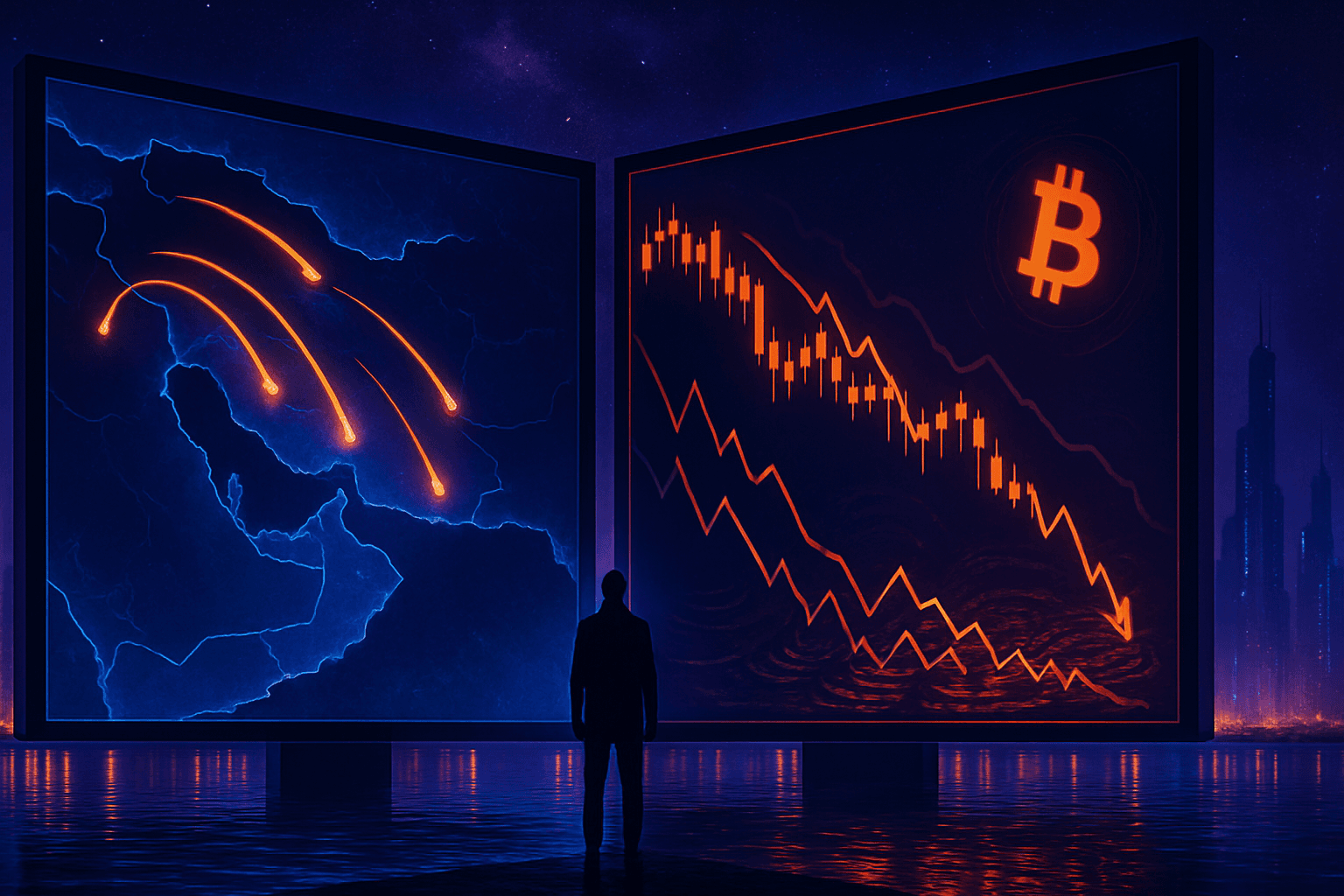
US Military Buildup in the Middle East Puts Crypto Markets on Edge
The US has repositioned missile systems to Jordan and is preparing to seize Iranian crude tankers. The dual escalation is tightening risk sentiment and raising questions about what a broader regional conflict would mean for crypto markets.
US Military Buildup in the Middle East Puts Crypto Markets on Edge
The United States has repositioned missile defense systems to Jordan and is preparing to seize Iranian crude tankers, a dual escalation tightening risk sentiment across financial markets and raising the probability of broader regional conflict between Iran and Israel.
The missile relocation represents a concrete shift in American military posture, not a diplomatic gesture. Combined with plans to intercept Iranian oil shipments, the moves signal Washington is willing to apply direct economic and military pressure on Tehran. Crypto Briefing reported that the deployments are "potentially altering regional stability and diplomatic dynamics" while reducing the window for a negotiated resolution.
Why Crypto Markets Are Watching Oil
The link between Middle East conflict risk and cryptocurrency volatility is well-documented, even if the correlation is sometimes misread. When geopolitical tension spikes, institutional investors typically rotate out of risk assets and into traditional safe havens: U.S. Treasuries, gold, and the dollar. Crypto sits firmly in the risk-asset column for most institutional portfolios, meaning a significant escalation would likely pressure Bitcoin and altcoin prices in the near term.
Oil is the transmission mechanism. A disruption to Persian Gulf shipping lanes, whether through Iranian retaliation or direct conflict, would push crude prices sharply higher. That feeds into inflation expectations, which in turn pressures central banks toward tighter monetary policy. Tighter liquidity conditions are historically bad for speculative assets, and crypto is among the most rate-sensitive asset classes in the world.
The 2020 assassination of Iranian General Qasem Soleimani offers a useful reference point. Bitcoin dropped roughly 3% in the 48 hours following the strike before recovering, while gold surged. The episode illustrated that crypto does not reliably function as a geopolitical safe haven, at least not on short timeframes when panic selling dominates.
Seizure of Iranian Tankers Adds an Economic Dimension
The planned seizure of Iranian crude tankers is a separate but compounding pressure point. Intercepting sovereign oil shipments is an aggressive act under international law, and Iran has historically responded to such moves with asymmetric measures: attacks on commercial shipping, proxy operations through groups like Hezbollah, or escalation at the Strait of Hormuz, through which roughly 20% of global oil supply passes.
A closure or even partial disruption of the Strait would send oil prices to levels not seen since the 2022 post-invasion spike. Brent crude above $120 per barrel would create the kind of macroeconomic shock that crashes risk assets across the board, crypto included. Sanctions regimes targeting Iran have disrupted global trade flows before, but physically seizing tankers moves the confrontation into a different category.
The Deterrence Argument Deserves Consideration
The bearish read on these developments is not the only defensible one. Military positioning frequently serves as deterrence rather than a prelude to direct conflict. The U.S. has maintained a significant military presence in the region for decades, and escalations in readiness have more often than not stopped short of kinetic engagement. Diplomatic back-channels often remain active even when military hardware is moving.
There is also the question of market pricing. If sophisticated investors have already built a geopolitical risk premium into crypto valuations, a further escalation that stops short of actual conflict might produce less volatility than the headlines suggest. Markets are forward-looking, and some portion of this risk is likely already reflected in current prices.
Broader Market Implications
The more important question for crypto investors is not whether Bitcoin drops 5% on a bad news cycle, but whether a prolonged Middle East conflict would fundamentally alter the macro environment in which crypto operates. A sustained oil shock, a return to elevated inflation, and a hawkish Federal Reserve response would constitute a genuinely hostile backdrop for digital assets. That scenario is not the base case today, but the probability is no longer negligible.
Gold's behavior in the coming sessions will be an important signal. If gold breaks higher while equities hold steady, markets are hedging against tail risk without fully pricing in conflict. If equities sell off alongside rising gold, the risk-off trade is broadening and crypto will face meaningful headwinds.
The U.S. military buildup in Jordan is a data point, not a verdict. But it is the kind of data point that serious crypto market participants cannot afford to ignore.