

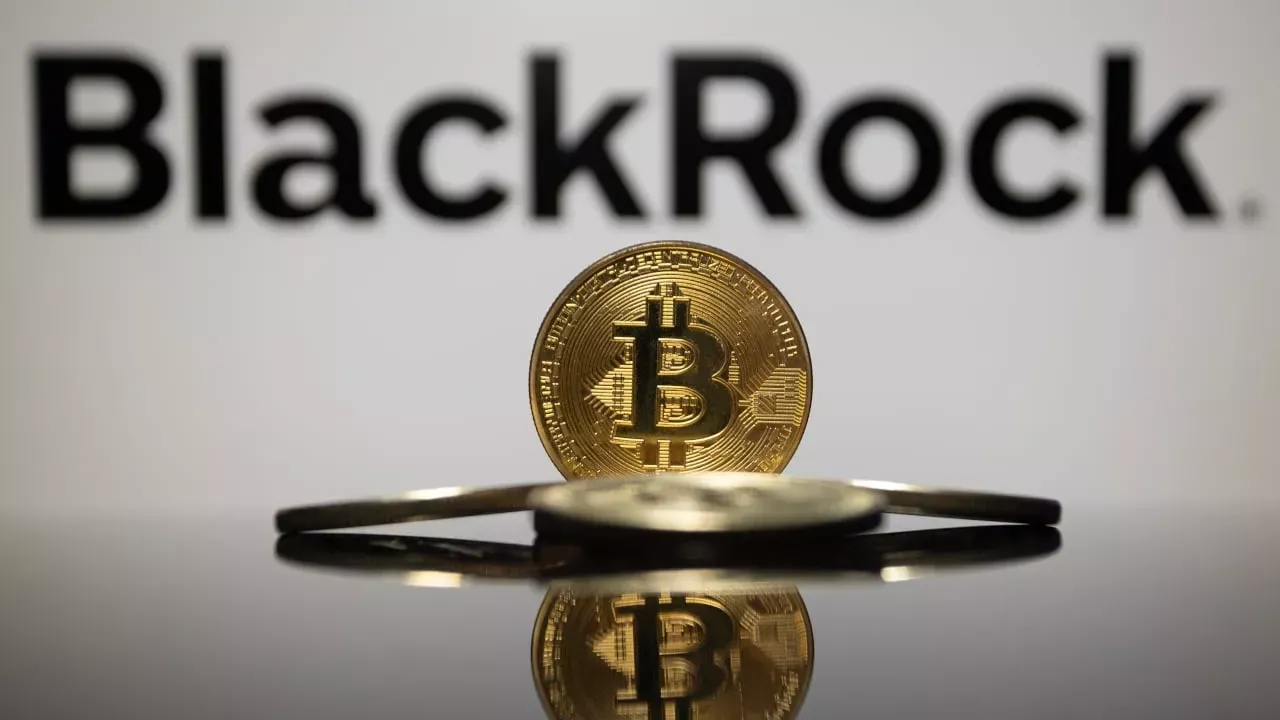
BlackRock Defies Market Nerves With $635 Million Bitcoin Bet Amid Renewed Price Drop
BlackRock adds $635M in Bitcoin in three days as prices fall, signaling strong institutional conviction amid volatility.
As Bitcoin slipped back into negative territory this week, one of Wall Street’s most powerful asset managers moved decisively in the opposite direction. BlackRock accumulated roughly $635 million worth of Bitcoin over three consecutive days, even as the cryptocurrency shed 3.38 percent and traded near $64,045, down from a recent rebound high of $69,953.
On-chain data shared by Lookonchain indicates that BlackRock received 4,082 BTC in its latest transfer from Coinbase Prime, a transaction valued at approximately $269 million. The movement marked the third straight day of inflows into the firm’s exchange-traded fund wallet, bringing the total accumulation over that period to 9,615 BTC. At current market prices, those holdings represent an exposure of about $635 million.
The timing has drawn particular attention. Bitcoin’s renewed weakness followed a brief rally, and broader market sentiment had turned cautious as traders reassessed short-term risk. Yet BlackRock’s steady buying suggests a strategic allocation rather than opportunistic trading. Coinbase Prime, which typically facilitates large over-the-counter transactions for institutional clients, is not commonly associated with speculative retail activity. Instead, its involvement signals deliberate positioning by large capital allocators.
This divergence between price action and institutional flows underscores a growing dynamic in the digital asset market. Retail sentiment often reacts swiftly to volatility, but long-term investors may interpret price pullbacks as entry points. In this case, the scale and consistency of BlackRock’s purchases stand out against the backdrop of declining prices. Rather than retreating amid uncertainty, the firm appears to be deepening its exposure.
BlackRock operates one of the largest spot Bitcoin exchange-traded funds in the United States, making its wallet activity a closely monitored barometer of institutional appetite. Sustained inflows during downturns can shape expectations about underlying demand, particularly in a market where liquidity and narrative momentum are closely intertwined. For many traders, such buying streaks are read as signals of confidence in Bitcoin’s long-term thesis despite short-term turbulence.
The broader crypto landscape remains sensitive to macroeconomic shifts, regulatory developments, and capital rotation across asset classes. Bitcoin’s 3.38 percent daily decline may appear modest by historical standards, yet the contrast between falling prices and accelerating ETF inflows highlights a structural shift in market composition. Institutional capital now plays a more pronounced role in smoothing or amplifying volatility.
BlackRock’s three-day accumulation does not guarantee an immediate price reversal. Markets rarely respond in linear fashion to even the largest flows. However, the firm’s willingness to deploy over half a billion dollars during a downturn reinforces a narrative of continued institutional conviction. In a market often defined by emotional swings, disciplined capital deployment may prove more consequential than short-lived price movements.